
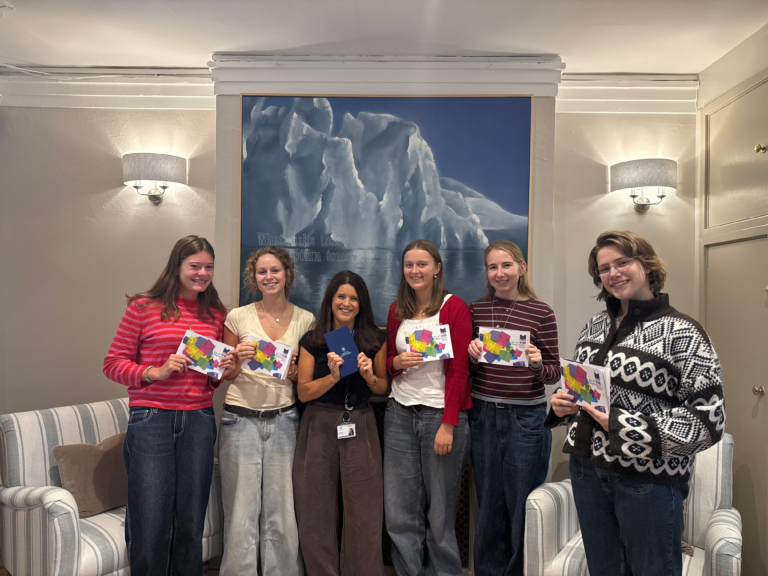
Roving Reporters Let Loose in Marlborough

Raising Hare by Chloe Dalton
Silver Marriott
 On the Saturday at this year’s Marlborough literature festival, the author of international bestseller ‘Raising Hare’ brought her story to an engaged and welcoming audience of young families at the Marlborough town hall.
Dalton shared her incredible story with the crowd, telling us how what began as a lockdown rescue of a tiny vulnerable leveret, turned into a journey of new knowledge, trust and coexistence of hare and human.
This specific talk was focused on her new children’s edition of ‘Raising Hare’, and I thought Dalton successfully engaged both the children and adults in the room, using interactive methods such as her ‘hare quiz’ at the end, and also focusing on facts she had learnt throughout her time with the hares. One fact that really surprised me was that hares are the only game species in the Uk and Wales that can be shot all year round. Dalton was very passionate on pursuing a new government law to protect these amazing creatures, as they do in Scotland. She also further engaged us in the idea of conservation by questioning how we can create a safer farming environment for a more secure life for hares.
Her story seemed to strike a chord within all members of the audience, as she showed videos of the stranded leveret growing up inside the warmth of her home.
She explained how she learnt many new things along the way, learning facts from even a 250 year old poem, telling her that hares love to eat raspberries!
Dalton also explained to us how hares have never been domesticated, even though they have been around for an extremely long time.
However, after this hare jumped over her garden wall, with Dalton left to believe she would never see it again, to her ‘absolute amazement’, the hare came back! She clarified that this was because she hadn’t once attempted to domesticate it, and therefore it felt safe and they could share a mutual trust.
Another discovery was made after having thought for an entire year that this hare was a boy, Dalton one morning went upstairs to her office, and found two newborn leverets tucked away behind the curtains, ‘Can you imagine my surprise!’. After these leverets were born, the mother only came back occasionally in the nights to feed them and sleep, so Dalton used this opportunity to write her story, using extracts taken from her very own diary.
Dalton concluded her talk by telling us not to look too far for a great story; she only took what happened at the bottom of her garden and from that ‘a book was born.’
She ultimately told us all what magic nature had brought into her life, purely because she slowed down and appreciated it.
Poetry Workshop – Roy McFarlane
Sophie Olson
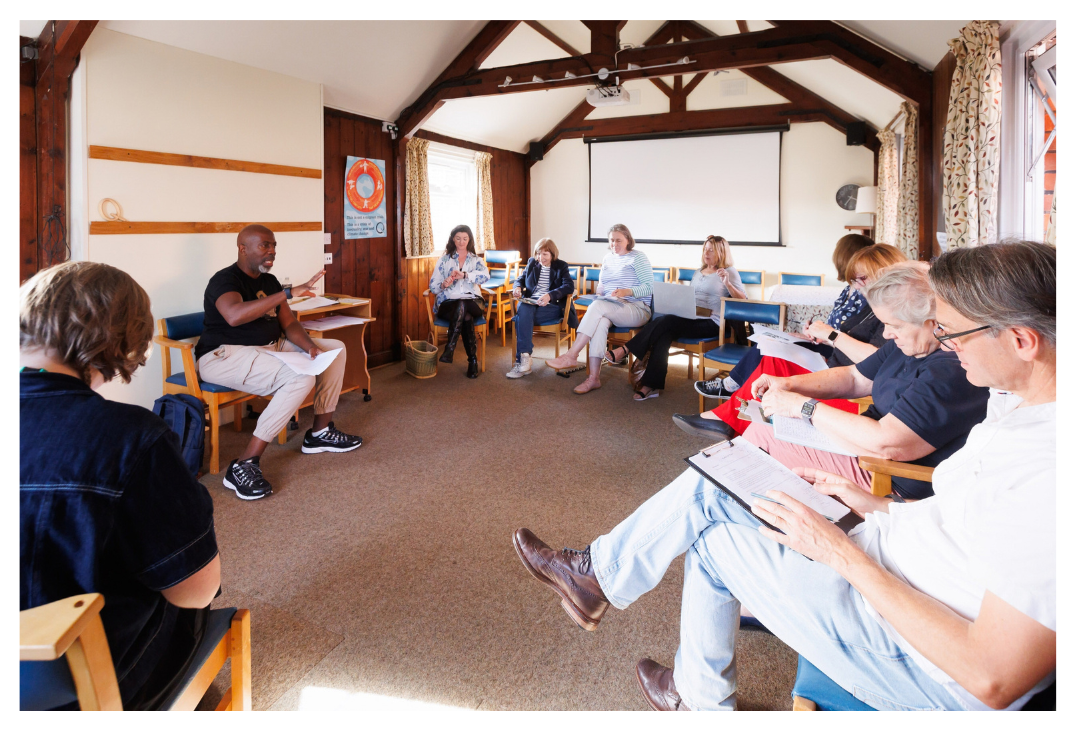 ‘I want people to love poetry’ was one of the first things Roy McFarlane said under the rafters of the Quaker Meeting House on Saturday. And that phrase resonated throughout the entire poetry workshop. McFarlane’s love of poetry flowed from him to all attendees, resulting in an assortment of poems being written throughout the session. Following the theme of water McFarlane guided us through exercises to encourage and stimulate poetic creativity. We all introduced ourselves and gave a water animal that we felt suited our personality. Some highlights of the list included McFarlane as a Heron, alongside a dragonfly, a seagull (assigned by this attendee’s daughter because she steals so many chips), a salmon, and a puffin. The prompted exercises included freewriting to music (‘Bridge Over Troubled Water’, Simon and Garfunkel), including words given at timed intervals into our poems, an exploration of regional mythology and associated poems, and writing poems inspired by art pieces. McFarlane performed a few poems throughout the session, both his own and ones from other poets, and on each occasion, the room fell silent with rapt attention. To finish we each read out one of our five poems that we had written during the workshop, and every single one was a delight to listen to. By the end even the most nervous or hesitant of poets in the room had become more confident and fluent in their writing, through McFarlane’s eager encouragement and support. The enthusiasm in the room suggested that I was far from alone in finding the workshop transformative and thoroughly enjoyable.
Operation Pimento by Adam Hart
Mathilda Nolte
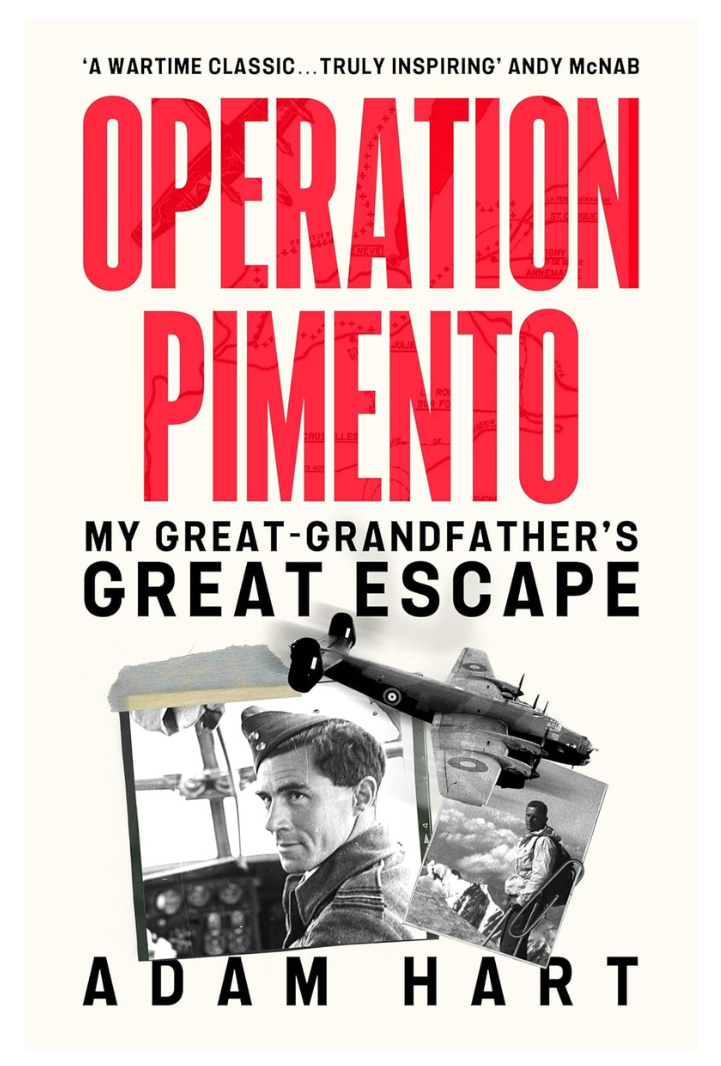 After walking through the cosy interior of White Horse Bookshop, we had the pleasure of hearing Adam Hart’s tale about the Great Escape of RAF fighter pilot Frank Griffins (Hart’s great-grandfather) from occupied France in 1943.
Hart began his fascinating talk by describing his great-grandfather’s childhood. As “a stubborn, adventurous child with no sense of danger”, he quickly shifted between schools and then bought a 21-foot shrimping yacht, which he lived on for six years.
Hart then related that Griffins joined the RAF in 1936, aged 24, against his family’s wishes, who saw it as “a quick way to be killed”. He then joined the war effort, though he was soon injured and sent home to a recovery centre. At this unlikely “Cupid’s Corner”, he met the love of his life and soon-to-be wife, WAAF Constance Ruth Fuller, whom he married within a year, with the threat of imminent invasion lying over them as an oppressive blanket.
Griffins’ next escapade was to become a test pilot, risking his life daily to determine the durability and safety of new planes and radars, before taking further risks for war effort as an operational pilot. From here, he was assigned, as Hart described it, “in his usual Frank way” to a special duty squadron at RAF Tempsford nicknamed the “Cloak and Dagger squadron”. This special group was heavily linked to the SOE and dropped special agents into occupied Europe at night, remaining on the ground for sometimes as little as two minutes before taking off again.
After completing 16 operations, Frank was then assigned to an extra special mission, “Operation Pimento”, in 1943, helping the Allies secure a foothold in Southern France. The mission, however, took a nasty turn when the crew were unable to locate the French revolutionaries on the ground, and Frank’s plane lost not one but two engines on the same side, plummeting downwards and smashing into civilian houses on the ground. Eleven people were killed in less than ten seconds, with Frank as the sole survivor after being flung through the windshield in his chair and getting caught in telephone wires.
Hart vividly described Frank’s escape from near peril, being hidden by French youths in a chimney for two days, before travelling with the French resistance and finally faking a marriage to a Swiss girl to flee across the border into neutral Switzerland and finally returning home to his wife and baby.
This enthralling talk ended with a description of Hart’s own attempt to recreate “Operation Pimento” and his great-grandfather’s staggering journey home, with all the amazing descendants of the people who had so crucially helped Frank to return to England.
The Tudor Theatre by Nick Fogg
“The theatre of Elizabethan England was a theatre of imagination.”
Heidi Ainge
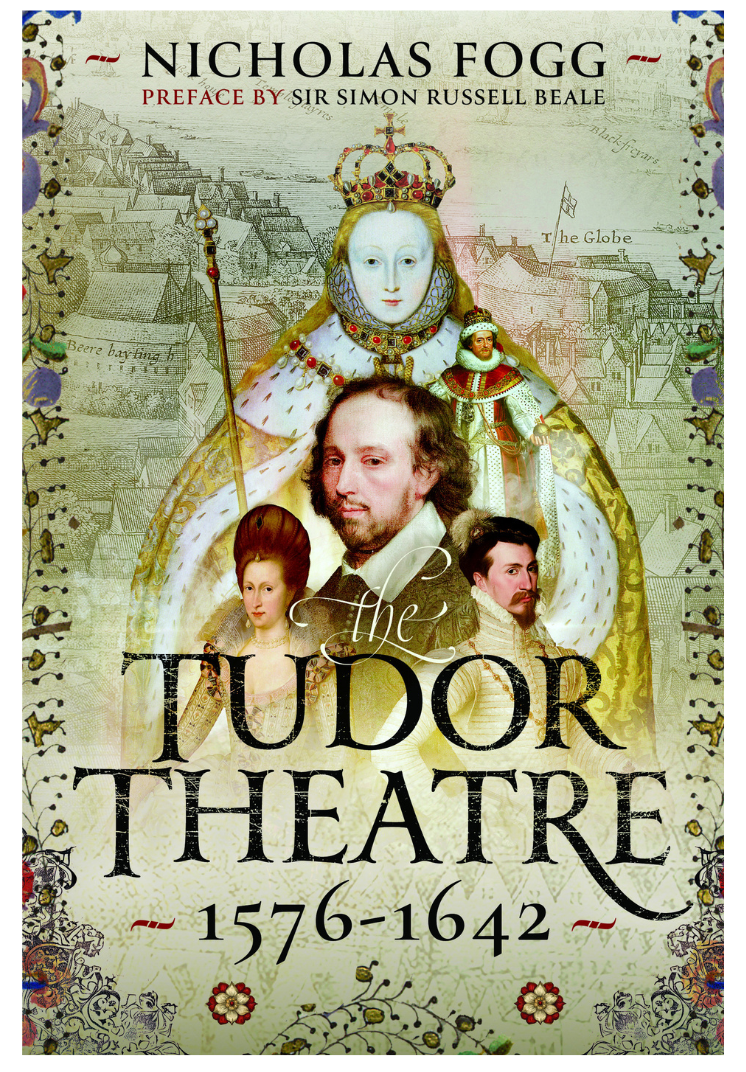 Nicholas Fogg’s talk ‘Tudor Theatre’ was all at once intriguing, educative, and riotously funny. From managing to convince the entire audience to imagine they saw a magnificent balcony on the white-washed walls; to exploring the connection between theatres and syphilis, there is absolutely no doubt that anyone left that room disappointed.
Despite the thrice mayor insisting otherwise, it is clear to me that Fogg must have inherited the ability to keep a crowd entertained that Shakespeare had from their shared birthplace. When previously I have thought of Elizabethan England, I must admit it was all glamourised: corsets and petticoats and long pipes. I have now been informed that the gentlemen of the time would spend all their afternoons either gaming, drinking, chasing harlots, or going to the theatre.
Up until the “purple whip of vengeance” (otherwise known as the Bubonic Plague), theatres in Tudor England were a roaring success. In this changing era, actors once considered as beggars and rogues were transformed under James Burbage’s hands into the finest actors in the world, a troupe of sixteen men who would be used for every play. With the exception of Mary Frith, a cross-dresser who would sing obscene songs and smoke pipes onstage, only men were actors. This included ‘the clown’, an individual who would go onstage to make jokes and bawdy comments to the audience – of which the Puritans were not fans.
Eventually, the theatre was closed in 1642 by the government. This was partly due to the violence and brawls which would break out, and as the theatre was used as a means of dissent. The most popular play of the era was not ‘Hamlet’ or ‘Macbeth’ – it was called ‘A Game of Chess’, a lewd play mocking the Spanish court.
To conclude, Nicholas Fogg is an excellent speaker, whose passion for Tudor theatre truly enlightened all of us on the reality- Elizabethan theatre was a theatre for the people performed by the people.
Finding Albion by Zakia Sewell (on folklore, music, and redefining nationalism.)
Iris Irwin
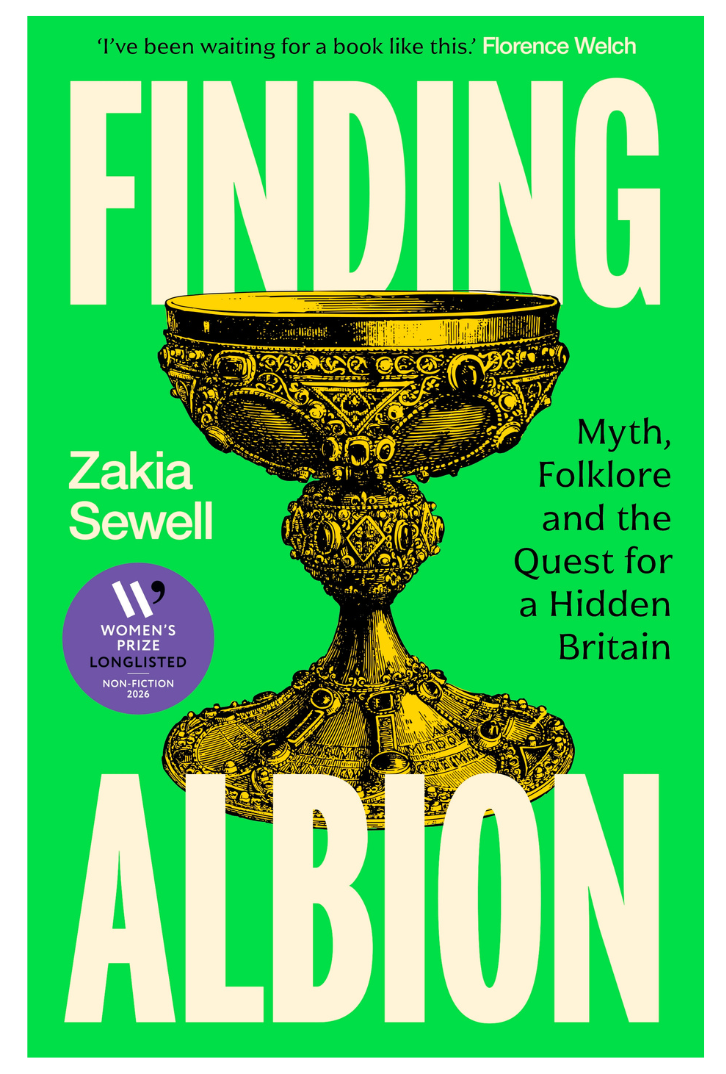 Zakia Sewell began not with Britain but with Greece; “Albion”, she explained, is the name the Greeks gave our island, a mysterious word steeped in the oneiric and the imaginary. She traced it back through its myth: giants said to have once inhabited our land before being wiped out by Brutus, and Albina, a Syrian princess who immigrated here with her sisters. William Blake, she noted, imagined the giant Albion as the soul of our nation; enigmatic, hidden, waiting to be found. Writing the book, she said, meant trying to “tune into its pulse”.
Her own search began with music, in a halcyon memory of a Pentangle concert she engaged in her “first encounter with this alternative spirit”. Sewell suggests that music has the power to bypass “the rational, the intellectual” and go straight to the heart. There was something genuinely ethereal in hearing her describing it live.
Sewell then turned to the relationship between folk and fascism: neo-Nazi groups have tried recruiting members through Morris dancing. Folk culture, she argued, has been hijacked and steered away from what it truly is: “a reflection of ordinary people and their woes, reliefs, and struggles”. Most people who are drawn to it simply want to connect to a version of England which is not intertwined with far-right nationalism. She pointed to new folk customs already springing up as proof: a revived “hunting of the wren” ceremony, a local Bulgarian folk society invited to share its own traditions. Sewell offered her advice for starting folk customs, “you just need will, love, and a little bit of time”.
When I asked her how we keep Albion alive, her answer turned inward: it means learning to “materialise that spirit” through creativity, through “listening, remaining curious, sensing, feeling”.
Finding Albion by Zakia Sewell
Be Lord
Zakia Sewell, a millennial audio producer, radio host, writer and DJ, is of mixed Caribbean and British heritage and now lives in London. She was interviewed by Bishop Andrew Rumsey, and the two seemed in perfect rhyme with each other, discussing neo- paganism, folk, and finding Britan’s true identify – or ‘Finding Albion’, the traditional/ mythical name for Britain and the title of Sewell’s book.
Sewell discussed what this book and journey meant to her, as part of her search to feel more connected to her heritage as Caribbean British women. This was also a personal journey for her, as growing up with mixed heritage can feel isolating. Sewell highlighted the importance of the celebration and fusion of culture, praising hybrid cultural events, like Notting Hill carnival. This celebration of British- Caribbean culture which takes place in London every years, is bled of both culture and a celebration of music and dance.
It is possibly no surprise that Sewell, whose career is largely centred around sharing music with the public, has written a book with a refrain of music running throughout. She describes music as a way of communicating that transcends the rational and the intellectual, and how music tells an alternative history. Sewell describes how through music, you can find the true spirt of Albein. At this time when, as a country we are questioning our national identity, we can find who we are through our music and shared, diverse culture.
In these radical political times, it is important that we connect and know who we are as a country and we reclaim our national identity, while not letting it be highjacked by extremists on either side of the political spectrum. Sewell attempts to find out what Britain without colonisation and imperialism looks like, speaking of Neo paganism and paganism that is historically rooted in British history and describing the transactional nature of Folk meetings, how the interactions tranced political, racial differences; while focusing more on human-to-human connection and irrelevance of politics in these settings. Ultimately, Sewell made sure to highlight that music is not an escape from the work that needs to be done, but a way to make sense of traditional Britain in the complex times we live in.
Farewell to Eden by Sebastian Faulks
Bea Lord
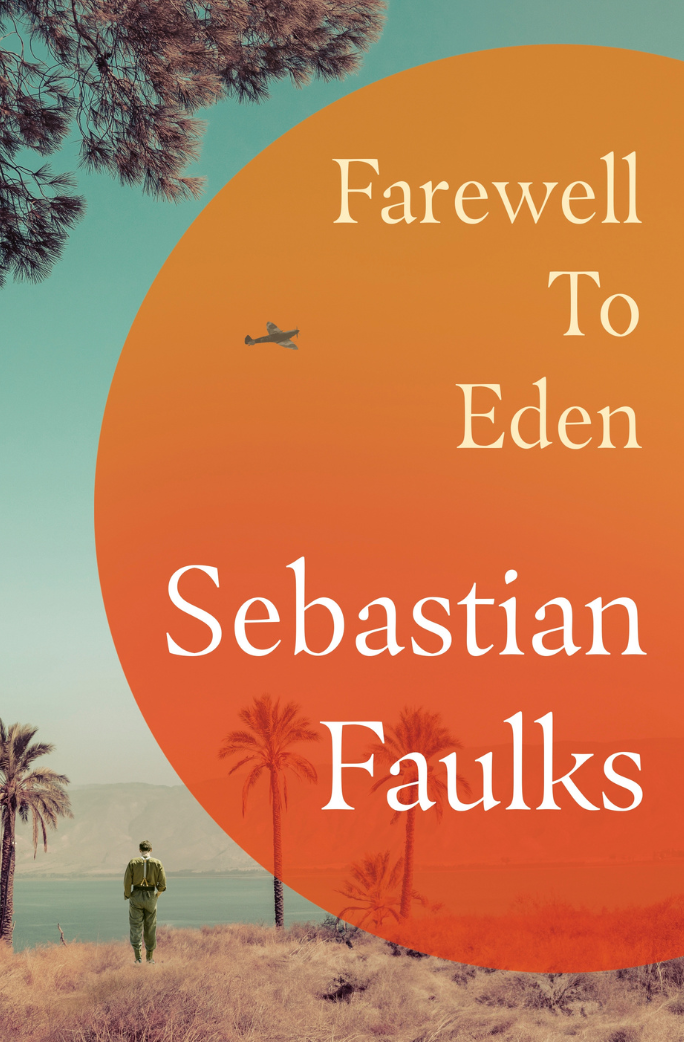 Philip Deval has served distinguished military career during WWII, which took him from Normandy to a peace keeping mission in the middle east. Only to then find himself teaching French in a all-girls boarding school in the countryside. Here we see his budding relationship with Frances Darwood, the music teacher bloom. As they share their past traumas, their relationship configures into something only those who have undergone deep traumatic experiences can find.
This novel teaches many important message, and one message that really struck home for me was the issue of blame. This was particularly pertinent when discussing the Palestine/ Isreal conflict. People sometimes think that blame is like a baton you can pass around. This viewpoint is not only relevant when discussing geo-politics, but has become a endemic in all areas of modern-day society. We seem to feel the need for one individual or group to be the villain, and the other the perfect victim. This polarised stance of either ‘villain or victim’, is damaging to both real life conflict and how we treat those involved.
However, the main character of Faulks’ novel, Philip Deval, challenges this binary way of attributing blame. He’s not your typical ‘Hero’ with ‘white saviour complex’, a common stereotype of many historical novels. Nor is he simply a ‘Villain’ or a ‘Imperialist colonizer’. Deval is simply a solider trying to aid a complex peace process while longing to return home.
His journey through this story is complex and as the reader we are their to accompany him through all the twist and turns and revelations. By the end, I was left with my opinion about him undecided. Ultimately, I felt that Deval was simply a man, scarred by war. A lonely man, who didn’t have the coping mechanism of religion that others had, but a human none the less, who made very human decisions.
Faulks description captivates the reader, especially with his description of Palestine and the landscape
This is a novel which – perhaps particularly in 2026 – challenges the reader to think anew about the complex situation in the middle east, and which will leave you feeling bittersweet.
Muv: The Story of the Mitford Girls’ Mother by Rachel Tretheway
Mia Budge
 The six Mitford sisters, each loud in their political views, have fascinated readers for a century; however, a key figure is yet to be introduced to popular history: the Mitford girls’ mother. Listening to Rachel Tretheway discuss her biography, Muv: The Story of the Mitford Girls’ Mother, we can vividly see where the six women’s keen political stances came from. Their mother, Lady Sydney Redesdale, or known more commonly to her children as Muv, was as open about her arguable political views as her daughters.
Rachel Tretheway exposes Sydney’s harsh and harmful views on her public support of Hitler, bringing to light the contrast between how she lived and how she is remembered. Throughout her lifetime, Lady Sydney Redesdale was an active supporter of the fascist dictator Adolf Hitler and was described as a very capable and intelligent woman.
In 1938, her daughters Diana and Unity, who were heavily embedded in Adolf Hitler’s inner circle, introduced Sydney and her husband to Hitler. Sydney, taken by the ‘good manners’ of the dictator, subsequently became an active supporter of him and pro-German groups at the time. This earned her family the not-so-affectionate nickname ‘The first British fascist family.’
However, Sydney was fiercely loyal to her family, becoming the bridge between her children who were estranged from each other. She directed the family through each crisis they faced throughout the years, receiving the respect of spectators and her children.
Many readers found it difficult to understand why such a surprisingly decent, resilient woman would support such a sadistic dictator. Tretheway interprets that Sydney was not merely a bystander to her daughter’s extreme political standpoints but a source of them.
Tretheway handles Sydney’s later years with immense nuance, such as her self-isolation to care for her daughter Unity after her failed suicide attempt. However, Tretheway does not shy away from Sydney’s indefensible areas and blind spots. Even long after the war, Sydney stubbornly insisted that Winston Churchill ruined her life and continued to defend Adolf Hitler as a ‘charming character’ until she died at age 83 from Parkinson’s disease.
Personally, I found Rachel Tretheway’s talk immensely interesting, and I learnt a great deal about the Mitford family. I found it to be eye-opening and fascinating, and I recommend the biography as it exposes the good and bad of the famous outward family.
Shakespeare in Translation by Daniel Hahn
Claudia Fry
 “What’s the point in translating Shakespeare?” Daniel Hahn asked the audience this as he began his discussion of the process of translating texts, specifically Shakespeare, which is the topic of his book ‘Shakespeare in Translation’. This shocking question made all of us in the audience listen attentively to Hahn, as we eagerly anticipated the answer that was to come during his interview.
Hahn then posed the thought-provoking argument that if you are not allowed to translate Shakespeare, you should not be allowed to perform it either. He argued that just as performing Shakespeare is personal and unique to an individual, so is translating, and it holds the same importance. Hahn stated that translating “feels like magic, but it’s more technical than that” he found that Shakespeare is everywhere you go, not just geographically, but also in speech, as we have adopted so many phrases from Shakespeare’s plays, and it’s important to share that with the world.
Hahn also told us about the issues you can encounter when translating Shakespeare into another language. For example, when Shakespeare uses structural tools that rely on syllable numbers, e.g. iambic pentameter, you may not be able to directly translate words if you want those techniques to remain. A similar problem can arise with rhyme, especially when Shakespeare sets up a pattern and then breaks it to create a certain effect, and a translator must notice the change and then use the language to create the same effect. However, translations of rhyme can sometimes heal the text, where pararhymes no longer rhyme in the modern day, they may in another language.
Finally, Hahn discussed the effect that translated Shakespeare can have, as translated Shakespeare does not replicate the English experience of him, it enhances and adapts it. Additionally, sometimes phrases make more sense in other languages, where modern English has lost its informal ‘thou’ and formal ‘you’, other languages such as French and German still have those pronouns, making the text easier to understand.
In conclusion, Daniel Hahn was brilliant in his talk about translating Shakespeare, bringing to light both the issues and wonders of translating magnificent plays into other languages. In answer to his opening question, Hahn explained exactly why it is needed, because translating Shakespeare puts his amazing writing onto a global stage.